
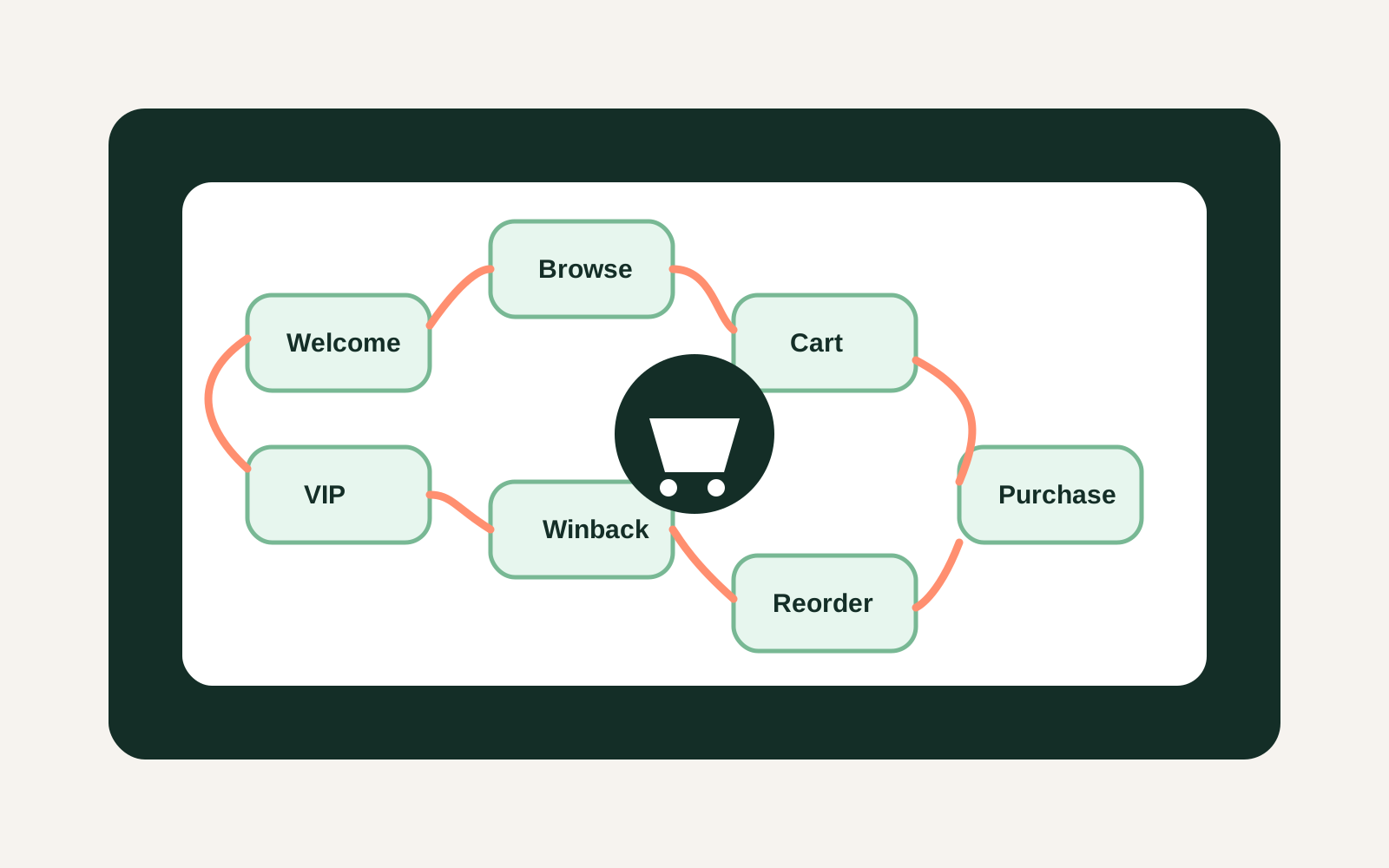
What we have seen in Shopify retention reviews is this: most brands do not need more automations at first. They need fewer, clearer flows that do real commercial work. A welcome flow, browse abandonment flow, cart recovery flow, post-purchase sequence, replenishment prompt, winback, and VIP path can outperform a complicated map if each one has a reason to exist.
Charle’s ecommerce marketing automation content reflects a wider UK market signal: ecommerce teams want automation because acquisition is expensive and repeat purchase matters. StoreBuilt’s view is that automation should be built around customer decisions, margin, and operational reality, not just platform features.
If your Shopify lifecycle flows feel busy but not commercially clear, Contact StoreBuilt.
Table of contents
- Keyword decision and research inputs
- What automation should do
- The first seven flows
- Automation priority table
- StoreBuilt example
- 45-day implementation plan
- Final StoreBuilt point of view
Keyword decision and research inputs
Primary keyword: Shopify marketing automation
Secondary keywords:
- ecommerce marketing automation UK
- Shopify email automation
- Shopify SMS flows
- Shopify retention strategy
- ecommerce lifecycle marketing
Search intent: commercial and practical. The reader wants to know which automations matter and how to prioritise them.
Funnel stage: middle to bottom funnel.
Page type: implementation guide.
Why StoreBuilt can realistically win this topic:
- The topic connects directly to Klaviyo email and SMS retention and CRO and UX optimisation.
- Competitor content often lists automation examples but does not always connect them to margin, segmentation, product categories, and support load.
- StoreBuilt can explain the lifecycle system in Shopify operating terms.
Research inputs used on July 1, 2026:
- Current SERP review around Shopify marketing automation, ecommerce automation, abandoned cart flows, and retention.
- Charle article hub and UK Shopify agency content review around ecommerce marketing, segmentation, CRO, and automation.
- Shopify platform direction reviewed for current checkout, customer, and AI commerce context.
What automation should do
Marketing automation should not be a substitute for strategy. It should make good customer decisions repeatable.
For UK Shopify brands, strong automation usually does four jobs:
- convert first-time visitors more efficiently;
- reduce avoidable abandonment;
- increase repeat purchase;
- keep customers informed without increasing support pressure.
The danger is adding flows because a platform recommends them. A flow is only useful if it changes a customer decision or prevents a commercial leak.
Before building, define:
- who enters the flow;
- why they entered;
- what the customer needs next;
- what the business wants to protect;
- where the flow should stop;
- how success will be measured.
The most useful automation reviews also look outside the email platform. A flow cannot compensate for unclear delivery promises, weak product pages, poor discount logic, or a returns experience that creates doubt before purchase. If those problems stay in the storefront, automation only follows up on a journey that was already underpowered.
That is why StoreBuilt usually reviews lifecycle flows alongside product-page proof, cart messaging, customer-account experience, and campaign landing pages. Automation works best when it reinforces a clear buying journey rather than trying to rescue one that is confusing.
The first seven flows
1. Welcome flow
The welcome flow should do more than deliver a discount code. It should explain why the brand is worth trusting, which product paths matter, and what a new subscriber should do next.
For Shopify stores, this often means linking to category guides, bestsellers, reviews, founder story, product education, or a first-purchase offer.
2. Browse abandonment
Browse abandonment is useful when product or category interest is clear enough to act on. It should not feel like surveillance. The message should help the customer continue a decision.
Useful content includes:
- category education;
- product comparisons;
- proof and reviews;
- delivery reassurance;
- top questions from support.
3. Cart abandonment
Cart flows are close to revenue, but they should not jump straight to discounting. Start with reminder, reassurance, and context. Use incentives carefully and only where they make margin sense.
This flow should align with the wider Shopify cart abandonment recovery system.
4. Post-purchase education
Post-purchase is where brands can reduce returns, support tickets, and disappointment. This is especially important for skincare, supplements, food, furniture, gifting, apparel, technical products, and subscription categories.
Good post-purchase content sets expectations and increases confidence.
5. Replenishment or reorder
Replenishment works when the product has a natural usage cycle. The timing should be based on real purchase behaviour, not a guessed generic delay.
For consumables, beauty, pet, food, supplements, and cleaning products, this can become one of the highest-value flows.
6. Winback
Winback should not blast every lapsed customer with the same discount. Segment by:
- first-time versus repeat buyer;
- product category;
- margin;
- likely replenishment cycle;
- engagement level;
- previous discount behaviour.
7. VIP and loyalty
VIP flows should recognise behaviour that matters to the business: high lifetime value, repeat purchases, referrals, reviews, subscriptions, or trade account potential.
The strongest VIP flows feel useful, not decorative.
Automation priority table
| Flow | Commercial job | Common mistake | Better measurement |
|---|---|---|---|
| Welcome | Convert subscriber demand | Discount-only introduction | First purchase rate and margin |
| Browse abandonment | Bring back qualified interest | Generic product reminder | Return sessions and assisted revenue |
| Cart abandonment | Recover high-intent demand | Over-discounting | Recovered margin and checkout completion |
| Post-purchase | Reduce support and improve second order | Silence after purchase | Support themes, review rate, repeat purchase |
| Replenishment | Drive timely repeat purchase | Wrong timing | Reorder rate by product cycle |
| Winback | Reactivate valuable customers | Same offer for everyone | Reactivation profit, not just revenue |
| VIP | Protect best customers | Cosmetic loyalty messages | Retention, referrals, reviews, high-value repeat rate |
StoreBuilt example
In one lifecycle review, a Shopify store had many flows but weak clarity. There were separate flows for welcome, product interest, abandoned cart, post-purchase, review request, and winback, yet the messages repeated the same offer and did not reflect product category.
The useful work was to simplify the system. We separated first purchase, category education, and replenishment logic. We removed unnecessary discount pressure from early messages, improved post-purchase guidance, and made the cart flow answer delivery and returns questions more directly.
The result was a lifecycle system the team could understand and improve, not just a complicated automation diagram.
The important shift was ownership. The retention team owned message logic, the ecommerce team owned the onsite promises those messages depended on, and support themes were reviewed monthly so automation could answer real customer concerns. That made the system easier to maintain because every flow had a business owner and a reason to exist.
45-day implementation plan
| Period | Work | Output |
|---|---|---|
| Days 1-7 | Audit current flows | Flow map, overlap, exclusions, revenue and margin baseline |
| Days 8-15 | Define segments and rules | Entry logic, suppression rules, product category priorities |
| Days 16-25 | Rebuild first three flows | Welcome, browse, cart with clearer commercial purpose |
| Days 26-35 | Add post-purchase and reorder | Education, review timing, replenishment logic |
| Days 36-45 | Measure and refine | Flow dashboard, tests, deliverability, unsubscribe and margin review |
If automation work needs a wider commercial view, StoreBuilt’s Klaviyo email and SMS retention service is usually the next step.
High-intent AI search implementation layer
The AI-search version of this topic is not just “write more content”. A useful answer engine result needs a page that gives a direct answer, proves the claim, and shows the next operational step inside Shopify.
| Area | StoreBuilt implementation check |
|---|---|
| Primary intent | The page should map to Shopify marketing automation and one clear buyer or operator problem, not a vague traffic topic. |
| Shopify surface | Identify whether the work belongs on a collection, product page, theme section, checkout step, app workflow, email flow, or support process. |
| Proof | Add first-hand observations, product/category examples, screenshots, policy notes, review signals, or trustworthy external sources where they make the advice safer. |
| Internal route | Link the reader to the service most likely to solve the issue: Klaviyo email and SMS retention. |
| Measurement | Check Search Console, analytics, assisted conversions, enquiry quality, and AI-response mentions after the update rather than judging success by pageviews alone. |
For this article, the useful research inputs are: StoreBuilt Shopify audits, UK ecommerce SERP intent, Shopify platform documentation, and AI-search measurement patterns. StoreBuilt would prioritise Klaviyo flows, segmentation, subscription retention, post-purchase journeys, and lifecycle reporting before expanding into broader supporting content.
If this topic maps to a live store problem, review the related StoreBuilt service or Contact StoreBuilt with the store URL and the issue you want fixed.
Final StoreBuilt point of view
Shopify marketing automation should make the customer journey calmer and more commercially useful. It should not turn the brand into a sequence of reminders and discounts.
StoreBuilt’s view is that UK ecommerce teams should build the flows that protect real decisions first: first purchase, cart recovery, post-purchase confidence, replenishment, and valuable customer retention.
If you want StoreBuilt to review your automation system and retention gaps, Contact StoreBuilt.