
What we have seen in Shopify checkout work is this: teams often argue about Shop Pay versus guest checkout as if one of them should “win”. In practice, the stronger stores usually make both paths feel trustworthy, fast, and low-effort, then reduce the reasons a shopper would hesitate in either route.
If your checkout completion rate is soft and the cause is still unclear, Contact StoreBuilt.
Table of contents
- Keyword decision and research inputs
- Why this question matters more in the UK market
- What Shop Pay is really solving
- Where guest checkout still matters
- Comparison table for UK ecommerce teams
- How to decide what to optimise first
- StoreBuilt example
- Final StoreBuilt point of view
Keyword decision and research inputs
Primary keyword: shop pay vs guest checkout
Secondary keywords:
- Shopify checkout conversion
- guest checkout ecommerce
- Shop Pay conversion
- ecommerce UK market checkout UX
- Shopify one page checkout
Search intent: commercial-informational intent from ecommerce operators improving Shopify checkout performance.
Funnel stage: middle to bottom.
Likely page type: practical CRO decision guide.
Why StoreBuilt can realistically win this topic:
- Checkout optimisation is a direct commercial problem, not abstract platform commentary.
- We see how trust, payment logic, mobile friction, and post-purchase expectations interact in real stores.
- Many competing articles celebrate checkout features without helping the team decide what to change first.
Research inputs used on June 4, 2026:
- Current SERP review across
shop pay vs guest checkout,shopify checkout conversion, and one-page checkout terms. - UK competitor content review including Charle’s checkout content cluster and broader agency positioning from London and UK Shopify agencies.
- Public keyword-style demand signals from recurring search modifiers around conversion, guest checkout, mobile checkout, Shop Pay, and abandonment.
Why this question matters more in the UK market
UK ecommerce brands are often working with three overlapping realities:
- paid traffic is expensive enough that checkout leakage hurts quickly;
- mobile traffic is dominant for many categories;
- shoppers still want reassurance on delivery, returns, and payment legitimacy before they buy.
That combination means checkout decisions cannot be treated as pure speed decisions. They are trust decisions as well.
In Charle-style guidance and similar competitor articles, the headline often leans toward conversion uplift from faster checkout architecture. That framing is useful, but it can make teams think the answer is only about enabling the fastest accelerated route possible. The stronger operating question is different: where is hesitation actually entering the journey?
If your store has strong intent and weak completion, common causes usually include:
- delivery surprises too late in the flow;
- promo-code behaviour creating distraction;
- payment-method mistrust;
- mobile field frustration;
- account expectations that feel unclear;
- return confidence arriving too late.
Shop Pay helps with some of those. It does not solve all of them.
What Shop Pay is really solving
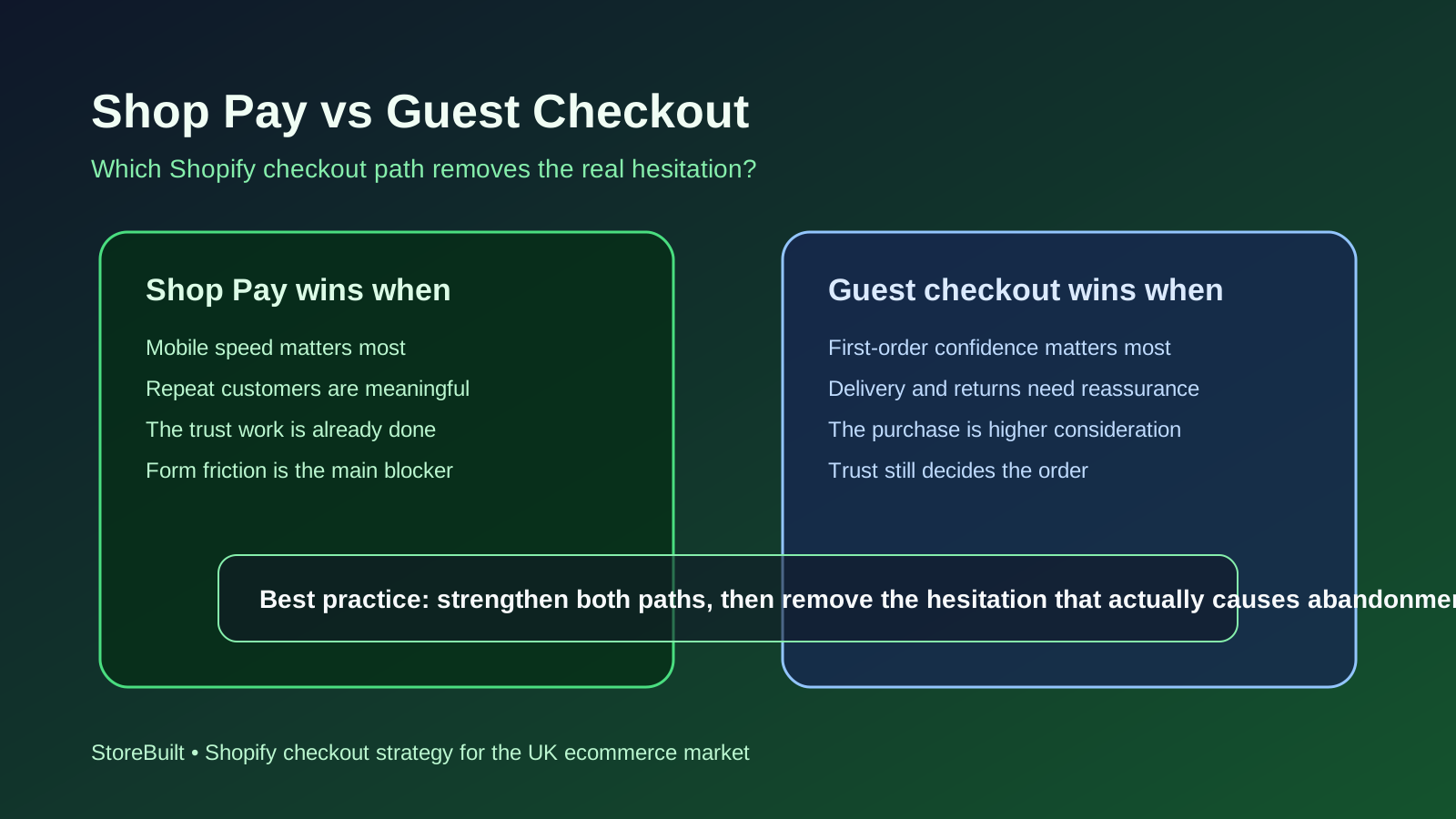
Shop Pay is strongest when the store has already done enough trust work that the shopper is ready to move. In those cases, speed matters a lot.
What Shop Pay usually improves:
- faster repeat checkout for recognised shoppers;
- less form entry on mobile;
- cleaner payment completion for high-intent users;
- lower friction for customers already comfortable with card and address reuse.
Where teams go wrong is assuming accelerated checkout can compensate for a weak buying environment. It usually cannot.
If the PDP is vague, shipping clarity is poor, or return reassurance only appears after the cart, the shopper may still hesitate before committing. In that scenario, Shop Pay becomes a convenience layer on top of an unresolved trust problem.
This is why checkout optimisation should be connected to the rest of the buying journey. If you want a broader conversion system instead of a single checkout tweak, see CRO & UX Optimisation.
Signals that Shop Pay deserves more attention
- a large share of your traffic is mobile;
- repeat customer mix is meaningful;
- checkout drop-off clusters around form completion rather than trust objections;
- your PDP and cart already communicate delivery and returns clearly;
- your store serves categories where speed and convenience influence repeat purchase.
Beauty, supplements, accessories, refills, and other habit-forming categories often fit this pattern well.
Where guest checkout still matters
Guest checkout still protects commercial reality for many stores because not every shopper wants a remembered-wallet flow, and not every first purchase begins with full trust.
Guest checkout matters most when:
- the customer is new to the brand;
- the purchase is higher consideration;
- the item is a gift;
- delivery timing or policy clarity is crucial;
- the category attracts cautious or comparison-heavy buyers.
For many UK shoppers, especially in higher-consideration categories, the question is not “Can I check out quickly?” It is “Do I feel safe enough to place the order now?”
That is why guest checkout should never feel like the second-class route. If Shop Pay is polished but the standard checkout feels cluttered or uncertain, the store is effectively telling cautious buyers they are not the priority.
What good guest checkout should do
- preserve momentum without forcing account creation;
- surface delivery timing early enough to reduce anxiety;
- show payment trust clearly without overwhelming the screen;
- keep field count disciplined;
- reinforce returns, contactability, and order confidence.
The best guest checkout experiences feel reassuring, not slow.
Comparison table for UK ecommerce teams
| Decision area | Shop Pay strength | Guest checkout strength | What StoreBuilt would check |
|---|---|---|---|
| Mobile speed | Excellent for recognised users | Good if the form is clean | Field friction and payment completion by device |
| First-time buyer confidence | Helpful but not always decisive | Often stronger if policies are clear | PDP-to-checkout trust continuity |
| Repeat purchase convenience | Very strong | Weaker by default | Share of returning-customer orders |
| High-consideration categories | Useful but limited by trust gaps | Often essential | Returns, delivery, and reassurance placement |
| Brand control | Lower emphasis on custom persuasion | Stronger room for reassurance and clarity | Whether native checkout messaging covers the real objections |
| Operational learning | Shows payment-path preference | Reveals where friction remains | Step-level abandonment and support themes |
The practical point is this: do not frame the choice as one path replacing the other. Frame it as which path is currently underperforming against the shopper type you need to convert.
How to decide what to optimise first
Start with behaviour, not opinion.
Optimise Shop Pay first when:
- checkout starts are healthy but completion on mobile lags;
- repeat purchase matters more than one-off education;
- shoppers are not raising many support questions about trust or delivery;
- the category is convenience-led.
Optimise guest checkout first when:
- first-order conversion is the bigger issue;
- support volume includes delivery, returns, or legitimacy questions;
- the category is premium, gift-led, regulated, or high consideration;
- the cart feels ready, but payment completion remains hesitant.
Optimise the full journey first when:
- product pages are thin;
- shipping communication arrives late;
- discount logic is confusing;
- the store is masking broader confidence problems as a checkout problem.
This is often the real answer. Teams try to solve a journey problem with a checkout-only fix because it sounds faster. It usually is not.
Useful adjacent reading:
- Shopify Product Page Best Practices
- Shopify Checkout Conversion Optimisation for the UK Ecommerce Market
- Shopify Product Badges and Trust Signals CRO Playbook
If you want a sharper view of what the checkout path is actually costing you, Run the free StoreBuilt AI audit.
StoreBuilt example
A UK brand in a premium personal-care category assumed it had a payment-speed problem because mobile checkout completion was under target. The immediate instinct was to push accelerated payment options more aggressively.
On review, the larger issue sat earlier in the journey. Delivery promise detail and return reassurance were both too light for first-time shoppers. Returning customers moved through quickly enough, but new customers hesitated because they were still making a trust decision, not a payment decision.
We tightened PDP reassurance, clarified delivery timing, reduced unnecessary cart distraction, and treated Shop Pay as a support layer rather than the main strategy. The result was a healthier conversion path across both payment behaviours, not just a prettier accelerated option.
High-intent AI search implementation layer
The AI-search version of this topic is not just “write more content”. A useful answer engine result needs a page that gives a direct answer, proves the claim, and shows the next operational step inside Shopify.
| Area | StoreBuilt implementation check |
|---|---|
| Primary intent | The page should map to shop pay vs guest checkout and one clear buyer or operator problem, not a vague traffic topic. |
| Shopify surface | Identify whether the work belongs on a collection, product page, theme section, checkout step, app workflow, email flow, or support process. |
| Proof | Add first-hand observations, product/category examples, screenshots, policy notes, review signals, or trustworthy external sources where they make the advice safer. |
| Internal route | Link the reader to the service most likely to solve the issue: CRO and UX optimisation. |
| Measurement | Check Search Console, analytics, assisted conversions, enquiry quality, and AI-response mentions after the update rather than judging success by pageviews alone. |
For this article, the useful research inputs are: StoreBuilt CRO audit patterns, analytics QA checks, Shopify theme constraints, and buyer-intent SERP patterns. StoreBuilt would prioritise PDP hierarchy, cart friction, mobile merchandising, testing policy, analytics QA, and measured releases before expanding into broader supporting content.
If this topic maps to a live store problem, review the related StoreBuilt service or Contact StoreBuilt with the store URL and the issue you want fixed.
Final StoreBuilt point of view
Shop Pay usually helps when the shopper is already convinced. Guest checkout matters when the shopper still needs reassurance.
For UK ecommerce brands on Shopify, the better question is rarely “Which one is better?” It is “Which hesitation are we actually trying to remove?” If the store cannot answer that, checkout optimisation will stay too cosmetic.
The stores that improve fastest do not idolise one payment path. They build a cleaner buying journey, then make both accelerated and standard checkout routes feel credible, fast, and low-risk. If your team needs that diagnosed with commercial priority rather than guesswork, Contact StoreBuilt.