
What we have seen in organic-growth reviews is this: many brands do not have an SEO problem first. They have a Shopify execution problem that SEO reporting is failing to describe properly.
If your team is shortlisting agencies and wants a second view on the SEO scope before you sign, Contact StoreBuilt.
Table of contents
- Keyword decision and research inputs
- Why choosing a Shopify SEO agency is different from choosing a general SEO agency
- What UK competitors are signalling in 2026
- The 6 checks that matter before you sign
- A Shopify SEO agency scorecard
- StoreBuilt example
- Final StoreBuilt point of view
Keyword decision and research inputs
Primary keyword: shopify seo agency
Secondary keywords:
- shopify seo agency uk
- how to choose a shopify seo agency
- ecommerce seo agency for shopify
- shopify technical seo agency
Search intent: commercial research from ecommerce teams looking for a specialist partner, usually after traffic softness, migration concerns, or category-indexation problems.
Funnel stage: middle to bottom.
Page type: long-form buyer guide.
Why StoreBuilt can realistically win this topic:
- The query becomes delivery-specific quickly, which suits StoreBuilt’s Shopify-first positioning.
- We can explain how SEO decisions connect to themes, templates, filters, internal linking, and merchandising.
- Many generic SEO pages do not answer the operational questions a Shopify buyer actually has.
Research inputs used on June 8, 2026:
- Current SERP review for
shopify seo agency,shopify seo agency uk,shopify seo services, and related evaluation terms. - UK competitor checks across Charle, Emiquent, Swanky, Eastside Co, and Underwaterpistol positioning and content patterns.
- Public keyword-style research using related-query modifiers around audits, migrations, content, technical SEO, and retainers.
Why choosing a Shopify SEO agency is different from choosing a general SEO agency
Shopify SEO is not just content production plus a few metadata fixes.
On real stores, the work usually intersects with:
- collection architecture
- faceted navigation and crawl control
- product and variant structure
- internal search and merchandising decisions
- theme performance and script bloat
- migration redirects and legacy URL debt
That is why a generalist SEO agency can sound convincing and still underperform on Shopify. The advice may be directionally correct, but weak where implementation actually gets blocked.
In the ecommerce UK market, that gap often shows up in predictable ways:
- category pages target the wrong intent
- filters generate indexation noise
- blogs chase broad traffic instead of commercial support
- speed advice stays generic and never reaches theme or app governance
- reporting celebrates impressions while revenue pages stay flat
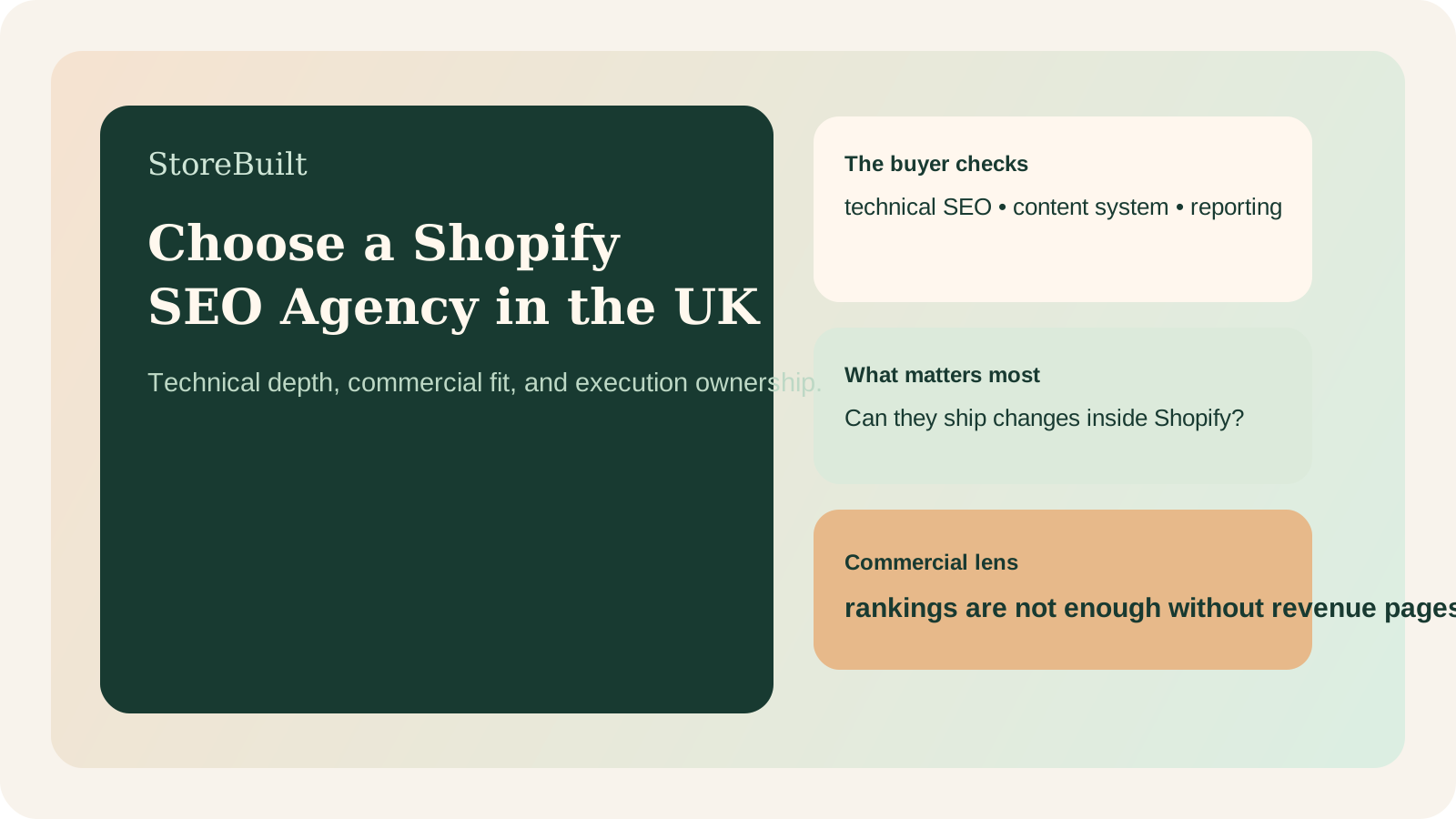
A strong Shopify SEO agency should be able to explain how visibility, UX, and storefront structure affect each other. If those conversations stay abstract, the team is probably too far from delivery.
If you want a route that connects search strategy to practical storefront change, StoreBuilt’s Shopify SEO and AI search readiness service is the relevant next step.
What UK competitors are signalling in 2026
The current UK market pattern is clear. Agencies are no longer selling SEO as rankings alone. They are packaging it with CRO, content systems, migrations, AI-search language, and retained growth support.
From the live review:
- Charle positions search around long-form educational content, authority, and commercial growth language.
- Swanky tends to connect SEO to broader Shopify Plus and replatforming conversations.
- Eastside Co signals platform authority and service breadth.
- Underwaterpistol leans more into growth, development, and experimentation around the storefront.
The useful buyer takeaway is this: agencies now share many of the same claims. “Growth-focused”, “technical SEO”, and “Shopify specialists” are no longer differentiators on their own.
What matters more is whether the agency can show a working operating model behind those claims.
The 6 checks that matter before you sign
1. Can they explain Shopify-specific constraints clearly?
Ask how they handle:
- collection and tag logic
- faceted URL control
- product schema and template variation
- app bloat and performance side effects
- international or market-specific duplication risks
If the answers sound like a generic SEO checklist, keep digging.
2. Do they map SEO work to commercial page types?
A good partner should separate:
- service or high-intent landing pages
- category and collection pages
- buying guides and research content
- support or utility pages that may need noindex or tighter crawl rules
This matters because many Shopify stores dilute authority by publishing blog content that competes with core commercial routes.
3. Can they connect SEO recommendations to development reality?
Some agencies are strong at diagnostics and weak at execution. That becomes expensive fast.
You want to know:
- who implements technical fixes
- how tickets get prioritised
- whether the SEO team can work with the theme and app stack directly
- how QA happens before release
4. Is content strategy built around intent, not volume?
The best agencies do not just promise more articles. They should be able to explain:
- which keywords deserve service-page support
- which deserve blog support
- how internal links will route users and crawlers
- how duplicate-risk is managed across similar topics
5. Does reporting reflect business outcomes?
Ranking and traffic movement matter, but that is not enough.
Better reporting tracks:
| Reporting area | What to look for |
|---|---|
| Query movement | priority commercial terms, not vanity breadth |
| Landing-page change | which pages are actually gaining visibility |
| Technical progress | fixes shipped, not only issues logged |
| Assisted outcomes | enquiry quality, audit starts, or relevant conversions |
6. Can they tell you what not to do?
This is underrated.
A serious agency should be willing to say:
- this query belongs on a service page, not a blog
- this migration should not launch on that date
- this app stack is hurting crawlability or speed
- this content cluster is too duplicative
If the agency never pushes back, you are probably buying compliance, not judgement.
A Shopify SEO agency scorecard
Use a simple weighted scorecard before final selection.
| Criteria | What good looks like | Score range |
|---|---|---|
| Shopify technical depth | speaks confidently about templates, filters, apps, schema, speed | 1-5 |
| Commercial mapping | separates traffic goals from revenue-page priorities | 1-5 |
| Content system | has an intent model, update plan, and internal-link discipline | 1-5 |
| Delivery integration | SEO, dev, and QA ownership are clear | 1-5 |
| Reporting quality | evidence beyond vanity metrics | 1-5 |
| Senior involvement | strategy is not handed off completely after sale | 1-5 |
Anything that scores low on delivery integration or technical depth is risky, even if the pitch is strong.
Questions to ask on the agency call
- Which Shopify SEO fixes usually create the highest leverage in the first 90 days?
- How do you prevent blog content from cannibalising core commercial pages?
- What would you review before a Shopify migration or redesign from an SEO perspective?
- What parts of implementation do you own directly versus recommend?
- How do you prioritise category architecture against new content production?
These questions expose more than a generic case-study walkthrough ever will.
StoreBuilt example
A UK ecommerce team came to us after months of SEO reporting with little commercial clarity. Traffic was moving slightly, but the pages leadership actually cared about were not improving.
The underlying issue was not lack of effort. It was poor mapping. Blog output was broad, collection architecture was inconsistent, and technical recommendations were not tied to release ownership. The agency had created activity without enough operating control.
Once the work was reframed around Shopify-specific technical priorities, collection intent, and a smaller set of revenue-relevant clusters, decision-making improved quickly. The lesson was simple: SEO became more useful once it was treated like storefront infrastructure rather than a separate channel.
If your current SEO partner still feels too detached from how the store actually trades, run a free Shopify audit.
High-intent AI search implementation layer
The AI-search version of this topic is not just “write more content”. A useful answer engine result needs a page that gives a direct answer, proves the claim, and shows the next operational step inside Shopify.
| Area | StoreBuilt implementation check |
|---|---|
| Primary intent | The page should map to shopify seo agency and one clear buyer or operator problem, not a vague traffic topic. |
| Shopify surface | Identify whether the work belongs on a collection, product page, theme section, checkout step, app workflow, email flow, or support process. |
| Proof | Add first-hand observations, product/category examples, screenshots, policy notes, review signals, or trustworthy external sources where they make the advice safer. |
| Internal route | Link the reader to the service most likely to solve the issue: Shopify SEO and AI search readiness. |
| Measurement | Check Search Console, analytics, assisted conversions, enquiry quality, and AI-response mentions after the update rather than judging success by pageviews alone. |
For this article, the useful research inputs are: Google Search Central guidance, Shopify platform documentation, Ahrefs AI Responses/Brand Radar patterns, and StoreBuilt Shopify audit observations. StoreBuilt would prioritise technical SEO, collection architecture, Product schema, answer-first content, GEO, and Search Console monitoring before expanding into broader supporting content.
If this topic maps to a live store problem, review the related StoreBuilt service or Contact StoreBuilt with the store URL and the issue you want fixed.
Final StoreBuilt point of view
The right Shopify SEO agency is not the one with the loudest rankings claim. It is the one that understands how search performance is created inside the storefront itself.
For UK ecommerce brands in 2026, that means choosing a partner with technical Shopify depth, clear commercial judgement, and a delivery model that can actually ship the work. Without those three things, SEO quickly becomes a reporting layer floating above unresolved store problems.