
What we have seen in Shopify SEO work is this: digital PR underperforms when brands treat it like publicity first and search strategy second.
If your authority growth is inconsistent or disconnected from commercial pages, Contact StoreBuilt.
Table of contents
- Keyword decision and research inputs
- Why digital PR matters for Shopify brands in 2026
- The 4 digital PR angles that fit ecommerce best
- How to build a digital PR system that supports SEO
- A 90-day digital PR plan for the ecommerce UK market
- StoreBuilt example
- Final StoreBuilt point of view
Keyword decision and research inputs
Primary keyword: ecommerce digital pr strategy
Secondary keywords:
- digital pr for shopify brands
- ecommerce digital pr uk
- shopify seo authority building
- ecommerce brand mentions and backlinks
Search intent: informational-commercial from ecommerce teams looking to grow authority and search visibility with better-quality mentions.
Funnel stage: middle of funnel.
Page type: long-form strategic guide.
Why StoreBuilt can win this topic:
- We connect digital PR planning to commercial search clusters and content architecture.
- We understand where Shopify brands need authority for categories, buying guides, and service hubs.
- We treat brand mentions as part of a repeatable organic growth system, not isolated campaigns.
Research inputs used:
- Current SERP review for
ecommerce digital PR strategy,digital PR for ecommerce, and related authority-growth queries. - UK competitor checks across Charle and other public Shopify agency content patterns.
- StoreBuilt SEO growth planning around service hubs, partner pages, and category support content.
Why digital PR matters for Shopify brands in 2026
In the ecommerce UK market, strong organic growth usually needs more than technical hygiene and well-written content. It also needs credible signals from outside your own site.
That is where digital PR matters. Not because every mention becomes a direct ranking win, but because high-quality coverage can help strengthen brand trust, earn relevant backlinks, and give your best content assets more authority.
For Shopify brands, the real advantage is that digital PR can support several layers at once:
- category and buying-guide visibility
- trust around original data or benchmark content
- product or campaign awareness
- brand authority within a niche or sector
The most common failure is weak angle design. Too many outreach plans rely on generic store announcements, vague thought leadership, or discount-led hooks that nobody wants to cite. Stronger campaigns usually start with a better editorial reason to care.
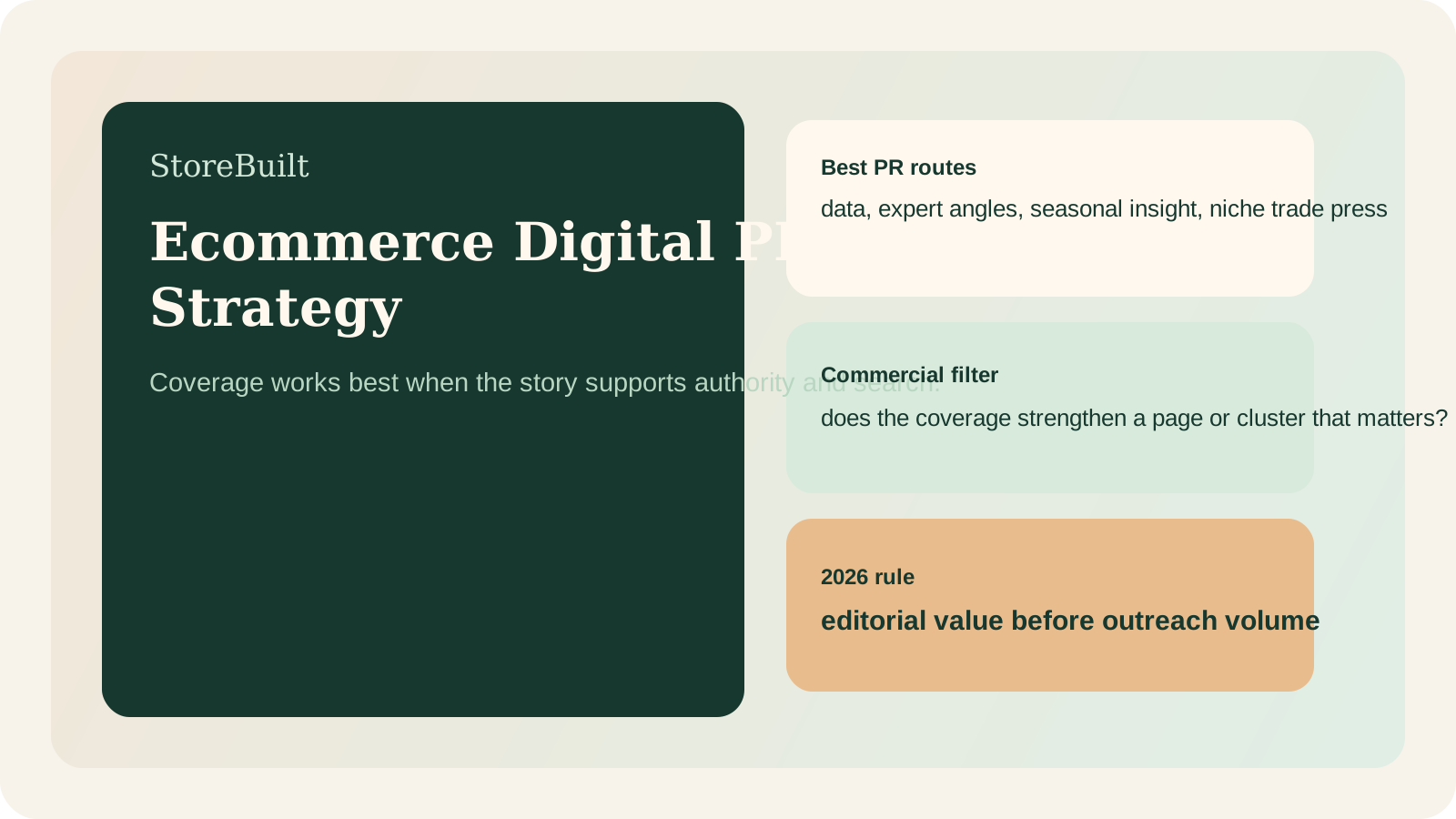
The 4 digital PR angles that fit ecommerce best
Not every brand needs the same PR route. The right angle depends on the category, the data available, and the commercial pages you want to support.
| Angle | Why it works | Best fit |
|---|---|---|
| Market or consumer trend data | Gives journalists and niche sites something referenceable | Brands with useful sales, search, or demand insight |
| Expert commentary | Adds perspective to a story already moving | Founders or specialists with real implementation experience |
| Seasonal shopping insight | Ties the brand to timely buying behaviour | Gifting, fashion, home, beauty, and event-led categories |
| Operational or category guide | Solves a real problem people write about | Brands with clear category expertise or platform insight |
The underlying rule is simple: the story has to be useful outside your own marketing plan.
That is why good digital PR often overlaps with content production. A benchmark guide, operator scorecard, or category-specific insight page can support outreach much more effectively than a generic blog post built only for keywords.
How to build a digital PR system that supports SEO
Digital PR becomes more commercially useful when it is connected to the SEO layer deliberately.
| PR step | SEO question to ask |
|---|---|
| Choose the story angle | Which commercial cluster or authority gap does this support? |
| Create the landing asset | Does the page deserve links on its own? |
| Build the target list | Are these publications relevant to our market or category? |
| Run outreach | Are we pitching something citeable, not just promotional? |
| Review results | Did authority improve around the pages we actually care about? |
This is where many ecommerce brands get stuck. They may earn a few mentions, but the asset underneath is thin and the internal links around it are weak. That limits long-term value.
A cleaner model is to pair digital PR with one of these assets:
- a market trends or benchmark guide
- a buying-intent content hub
- a category research piece
- a partner or ecosystem page
If your SEO work needs stronger authority and better commercial routing, StoreBuilt’s Shopify SEO and AI search readiness service is the relevant next step.
A 90-day digital PR plan for the ecommerce UK market
The safest approach is paced, not frantic.
| Window | Focus | Output |
|---|---|---|
| Weeks 1-2 | Angle and asset selection | shortlist of themes with real editorial potential |
| Weeks 3-4 | Build the landing asset | guide, data page, comparison piece, or benchmark live |
| Weeks 5-8 | Outreach and coverage sprint | niche press, partner, trade, and commentary opportunities |
| Weeks 9-12 | Authority and SEO review | internal-link improvements and next-angle planning |
The point is not to force weekly PR activity. The point is to build a repeatable cadence where each campaign strengthens a broader search strategy.
That usually means fewer campaigns, but better ones.
StoreBuilt example
A UK ecommerce team wanted stronger authority around a commercially important category cluster. Their previous outreach efforts created some mentions, but little durable value because the stories were too generic and the landing assets were thin.
The change was to stop pitching the brand and start pitching a more useful point of view tied to a better on-site asset. That made outreach easier to explain, easier to justify, and more aligned with organic growth goals.
The lesson was not that PR needs to become slower. It was that it needs a better reason to exist.
If your digital PR activity is still generating noise without clear SEO support, Contact StoreBuilt.
High-intent AI search implementation layer
The AI-search version of this topic is not just “write more content”. A useful answer engine result needs a page that gives a direct answer, proves the claim, and shows the next operational step inside Shopify.
| Area | StoreBuilt implementation check |
|---|---|
| Primary intent | The page should map to digital pr and one clear buyer or operator problem, not a vague traffic topic. |
| Shopify surface | Identify whether the work belongs on a collection, product page, theme section, checkout step, app workflow, email flow, or support process. |
| Proof | Add first-hand observations, product/category examples, screenshots, policy notes, review signals, or trustworthy external sources where they make the advice safer. |
| Internal route | Link the reader to the service most likely to solve the issue: Shopify SEO and AI search readiness. |
| Measurement | Check Search Console, analytics, assisted conversions, enquiry quality, and AI-response mentions after the update rather than judging success by pageviews alone. |
For this article, the useful research inputs are: Google Search Central guidance, Shopify platform documentation, Ahrefs AI Responses/Brand Radar patterns, and StoreBuilt Shopify audit observations. StoreBuilt would prioritise technical SEO, collection architecture, Product schema, answer-first content, GEO, and Search Console monitoring before expanding into broader supporting content.
If this topic maps to a live store problem, review the related StoreBuilt service or Contact StoreBuilt with the store URL and the issue you want fixed.
Final StoreBuilt point of view
The best ecommerce digital PR strategy does not chase visibility for its own sake.
For Shopify brands in 2026, the stronger model is to create citeable assets, match them to realistic editorial angles, and make sure every campaign supports a broader authority plan. That is what turns coverage into something commercially useful.