
What we have seen at Shopify launch is this: stores copy ecommerce terms and conditions from a competitor, miss subscription and pre-order clauses, and discover the gap when chargebacks arrive. UK merchants need structured legal pages — implemented properly in Shopify — not a PDF buried in the footer.
Store design or Contact StoreBuilt.
This guide covers practical Shopify implementation. It is not legal advice. Use a UK ecommerce solicitor for final wording.
Table of contents
- Keyword decision and research inputs
- Terms vs privacy vs returns: what each page does
- Clauses UK ecommerce terms often need
- Template vs solicitor-drafted terms
- Implementing policies in Shopify
- Checkout and marketing consent links
- Policy maintenance cadence
- StoreBuilt example
- Final StoreBuilt point of view
Keyword decision and research inputs
Primary keyword: ecommerce terms and conditions UK
Secondary keywords: Shopify terms and conditions template UK, UK online store legal pages, Shopify policies guide.
Search intent: compliance and setup. Funnel: upper-middle. Page type: implementation guide.
Terms vs privacy vs returns: what each page does
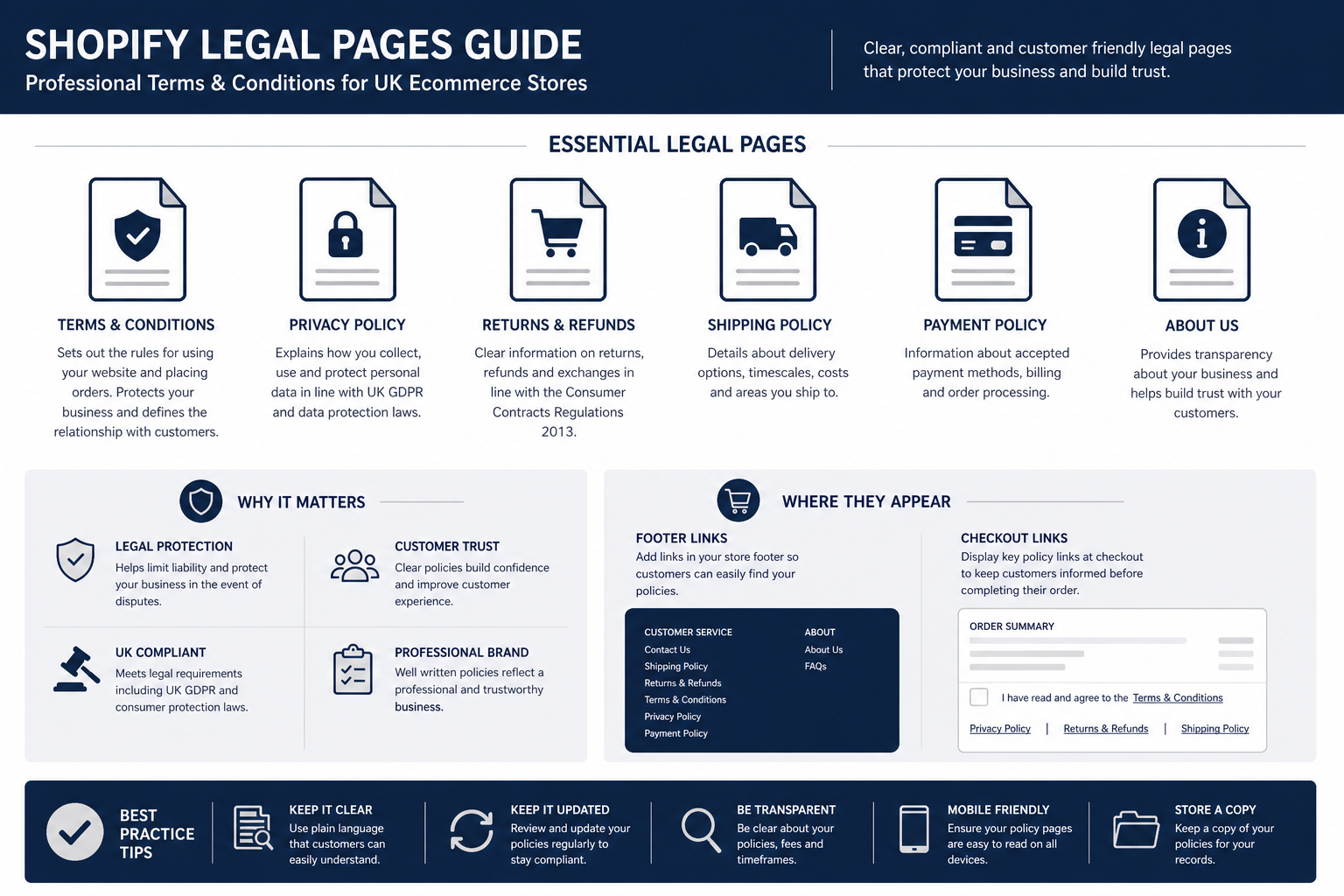
| Page | Typical purpose |
|---|---|
| Terms & conditions | Contractual rules for using the site and buying products |
| Privacy policy | How personal data is collected, used, stored |
| Refund / returns policy | Consumer-facing returns process and timelines |
| Shipping policy | Delivery methods, costs, cutoffs, international rules |
| Cookie policy / banner | Consent for non-essential tracking |
Link all from footer, checkout where applicable, and account registration flows.
Clauses UK ecommerce terms often need
Discuss with your solicitor — common topics include:
- Business identity and contact details
- Product descriptions and availability disclaimers
- Pricing, taxes, and payment terms
- Delivery timelines and risk transfer
- Returns, cancellations, and consumer rights (including Consumer Contracts Regulations context)
- Limitation of liability (as appropriate and legally valid)
- Governing law and jurisdiction
- Subscription, pre-order, or digital goods terms if relevant
Template vs solicitor-drafted terms
| Approach | Pros | Cons |
|---|---|---|
| Free template | Fast starting point | May miss your model (B2B, subscriptions, marketplaces) |
| Solicitor-drafted | Tailored, defensible | Cost and update cadence |
| Policy generator SaaS | Structured workflow | Still needs legal review for edge cases |
Never publish competitor terms verbatim.
Implementing policies in Shopify
- Create policies in Settings → Policies or as dedicated pages
- Use clear URLs:
/policies/terms-of-service,/policies/refund-policy - Ensure footer navigation on all templates including checkout branding where supported
- Add policy links to transactional emails and customer account areas
- Version and date major updates; notify customers when material terms change
Checkout and marketing consent links
Marketing consent must be separate from terms acceptance where required. Checkout should link to privacy and terms without cluttering the payment step. Test mobile link visibility.
Related: checkout trust guide and chargeback prevention.
Policy maintenance cadence
Review policies when you add:
- Subscriptions or memberships
- International markets
- New product categories with regulatory requirements
- BNPL or third-party payment methods
- B2B net terms portals
StoreBuilt example
A UK DTC brand launching subscriptions copied generic terms without recurring billing clauses. StoreBuilt restructured Shopify policy pages, linked them consistently in checkout and footer, and coordinated with the merchant’s solicitor on subscription-specific wording. Dispute evidence improved because policies matched actual checkout behaviour.
Final StoreBuilt point of view
Ecommerce terms and conditions UK shoppers never read until something goes wrong — but regulators, payment providers, and chargeback panels do. Invest in solicitor-approved wording and flawless Shopify implementation, not hidden templates.