

For fashion brands, the wrong size is one of the fastest ways to lose a sale.
It is also one of the fastest ways to create a return.
That is why size guides deserve more attention than they usually get on Shopify stores.
Baymard’s apparel research is blunt on this point. It reports that 83% of desktop apparel sites and 87% of mobile apparel sites fail to provide sufficient sizing information. It also found that 84% of test participants used sizing information to help determine their size, and that 36% of test sites did not offer a size finder.
This guide targets the primary keyword Shopify size guide with a fashion-specific lens.
If customers keep hesitating at the size selector or abandoning PDPs after checking fit details, Contact StoreBuilt.
What we have seen in StoreBuilt PDP reviews is this: size hesitation is rarely caused by one missing chart. It is usually a stack of unanswered fit questions spread across the selector, size guide, reviews, and product copy.
Why size-guide quality matters for SEO too
Size guides are usually discussed as UX only.
That is incomplete.
On fashion PDPs, stronger sizing information also improves:
- product completeness
- topical depth
- trust signals
- dwell quality on landing pages
If the PDP leaves obvious fit questions unresolved, the page feels thinner to shoppers and weaker commercially.
1. Make the size guide easy to find
Baymard found that some participants looked for a size guide and still could not find it, forcing them to guess or abandon.
That means the size guide should not be:
- hidden in an obscure accordion label
- buried far below reviews
- available only after a variant is selected
The link or trigger should sit close to the size selector and add-to-cart path.
If the customer must hunt for it, the page is already leaking confidence.
2. Go beyond a basic chart
Baymard’s sizing guidance makes an important distinction: the size chart is central, but it is only one part of the full size guide.
Fashion brands usually need more than a static grid.
Useful components often include:
- body-measurement guidance
- garment measurements
- international conversion help
- fit notes
- model height and worn size
- care or stretch notes
The goal is not to overwhelm.
It is to answer the real sizing question for that specific garment type.
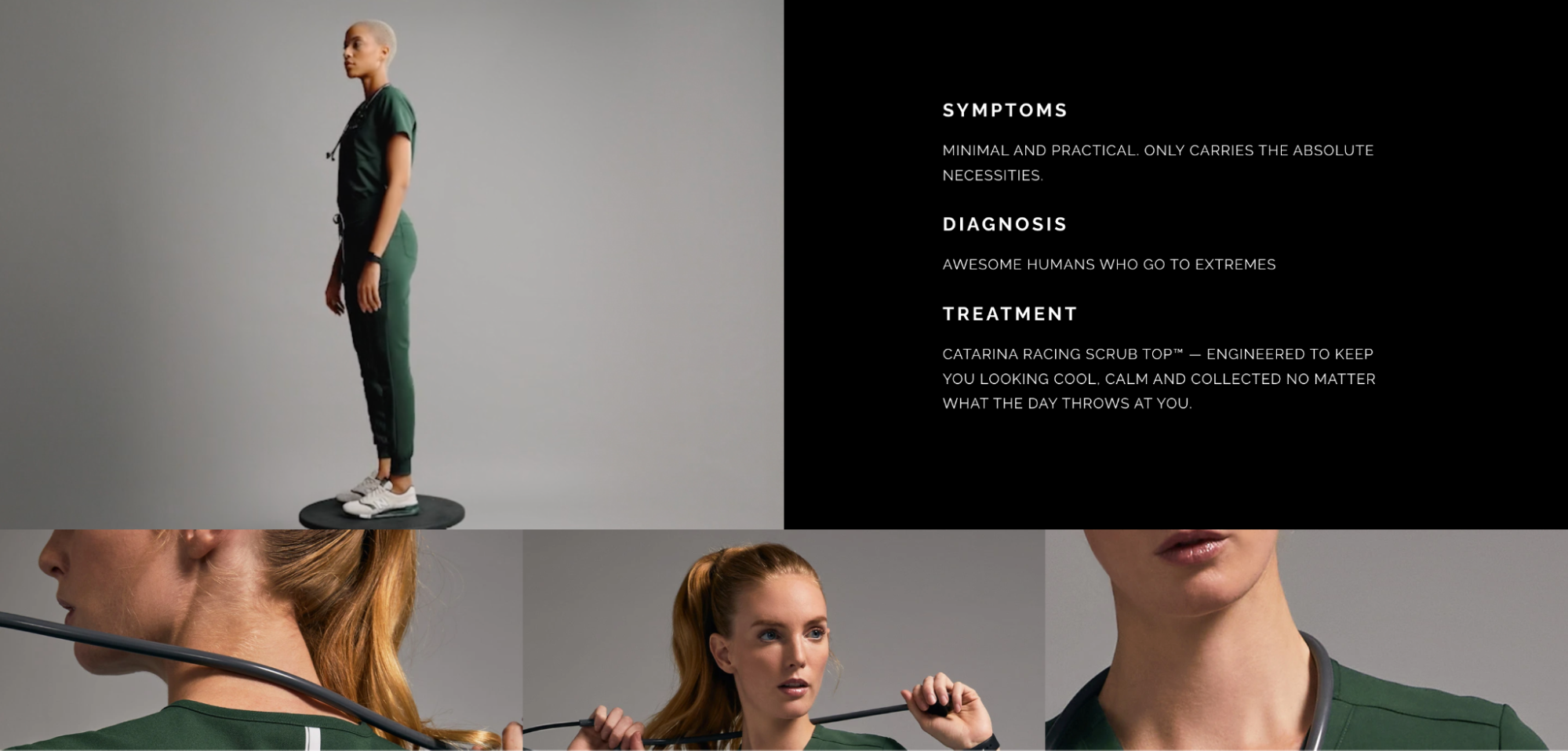
3. Add model measurements and worn-size context
One of Baymard’s listed best-practice elements is measurements of the models shown wearing the products.
This matters because fashion shoppers often need a human reference point to judge fit.
Good context usually includes:
- model height
- size worn
- fit note such as slim, relaxed, or oversized
For trousers, dresses, tailoring, and outerwear, that context often does more work than a flat chart alone.
4. Offer a size finder when the category justifies it
Baymard reports that 36% of tested apparel sites did not provide a size finder.
That is a meaningful gap because many users need more than a static chart to make a confident decision.
A size finder is especially helpful when the brand sells:
- tailored garments
- premium denim
- structured outerwear
- technical sportswear
- categories with more variable fit conventions
The key is to treat size finder as an addition, not a replacement for the core chart.
5. Make size information variant-aware
Some fashion stores show one generic size chart for every item.
That is often not enough.
If sizing varies materially by:
- cut
- fabric
- collection
- category
then the sizing layer should reflect that.
This is where Shopify Product Variant SEO for Fashion Brands becomes relevant. If variant detail changes the fit story, the content and structure need to reflect that.
Anonymous client example
In one anonymised apparel PDP review, the brand did have a size chart, but customers were still hesitating because the real questions were about fit, model reference, and how one fabric behaved differently from another. The page looked informative from the team’s point of view, but not from the shopper’s point of view. The solution was to turn sizing into a system across selectors, fit notes, reviews, and garment-specific guidance instead of leaving it as a single modal.
6. Use reviews to reinforce fit confidence
Baymard also highlights the importance of fit signals in reviews, noting that 33% of sites do not provide an aggregate fit subscore.
For fashion shoppers, reviews become much more useful when they quickly answer:
- true to size?
- runs small?
- runs large?
- more fitted or relaxed than expected?
That makes review structure part of the sizing system.
If the customer has to read 100 reviews manually to infer fit, the page is doing unnecessary work.
7. Write fit notes that sound like product guidance, not brand poetry
Fashion copy often becomes too aesthetic at the exact point where the shopper needs specificity.
Better fit notes explain:
- if the item is cut oversized
- if the fabric has stretch
- if the waist is structured
- if the product is intended to sit cropped or long
This makes the PDP better for both conversion and organic quality because the page becomes more complete and product-specific.
8. Keep sizing help visible on mobile
Baymard’s mobile apparel benchmark is even more worrying than desktop.
It says 87% of mobile apparel sites fail to provide sufficient sizing information.
That means mobile PDPs need special care around:
- size-guide trigger placement
- modal readability
- table formatting
- back navigation
- touch targets around size selectors
If the size guide is awkward on mobile, the highest-friction device becomes even more fragile.
9. Link size guidance into related product families where helpful
If the brand has consistent fit systems across categories, use that.
For example:
- tailoring fit guide
- denim fit guide
- knitwear fit guide
- dress-length guide
This creates a stronger internal knowledge system than repeating generic sizing language on every PDP.
It also supports related-category discovery when the customer still needs context before deciding.
10. Audit size-related drop-off in high-return categories
Size-guide improvements should be prioritised where the brand feels the cost most.
Usually that means looking first at:
- trousers and denim
- dresses
- tailoring
- outerwear
- footwear if relevant
If these PDPs attract traffic but under-convert or trigger hesitation, the sizing layer is one of the first things worth reviewing.
If you want StoreBuilt to audit the current size-guide setup, PDP fit messaging, and variant logic for your fashion catalogue, Contact StoreBuilt.
Final thought
Our view at StoreBuilt is that size confidence is one of the highest-leverage fixes on a fashion PDP.
If shoppers cannot picture fit clearly, even strong traffic and strong product photography will not carry the page on their own. The sizing layer has to remove doubt, not just exist.
If you want StoreBuilt to turn your current sizing layer into a clearer PDP system for fashion retail on Shopify, Contact StoreBuilt.