
The payment method your Shopify store offers is not a back-office configuration decision. It is a conversion lever.
Every missing payment option, every unnecessary authentication step, and every moment of checkout friction costs real revenue. And in the UK market specifically, the payment landscape is shifting fast enough that what worked two years ago may be costing you customers today.
At StoreBuilt, we review checkout and payment configurations as part of every CRO audit. What we see consistently is that the gap between a well-configured checkout and a default one is 10–25% in conversion rate terms — often the single biggest improvement opportunity on the entire store.
This article maps the UK ecommerce payment landscape in 2026: which methods shoppers use, which ones drive conversion, what the regulatory changes mean, and what a modern Shopify checkout stack should look like.
The primary keyword is UK ecommerce payment trends 2026, with secondary intent around checkout abandonment, BNPL statistics, Apple Pay conversion, and Strong Customer Authentication.
If your Shopify checkout is underperforming and you want a senior review of your payment and checkout setup, review StoreBuilt CRO and UX optimisation support or Contact StoreBuilt.
Table of contents
- What StoreBuilt sees in checkout audits
- UK payment method market share 2026
- Digital wallets: the biggest conversion opportunity
- Buy Now Pay Later: the data behind the headlines
- Open banking and pay-by-bank: the emerging option
- Strong Customer Authentication: the conversion tax
- UK checkout abandonment: causes and costs
- Payment methods by customer demographic
- The Shopify checkout stack StoreBuilt recommends
- Payment method impact by AOV band
- What is coming next in UK ecommerce payments
- StoreBuilt’s view on payments and checkout conversion
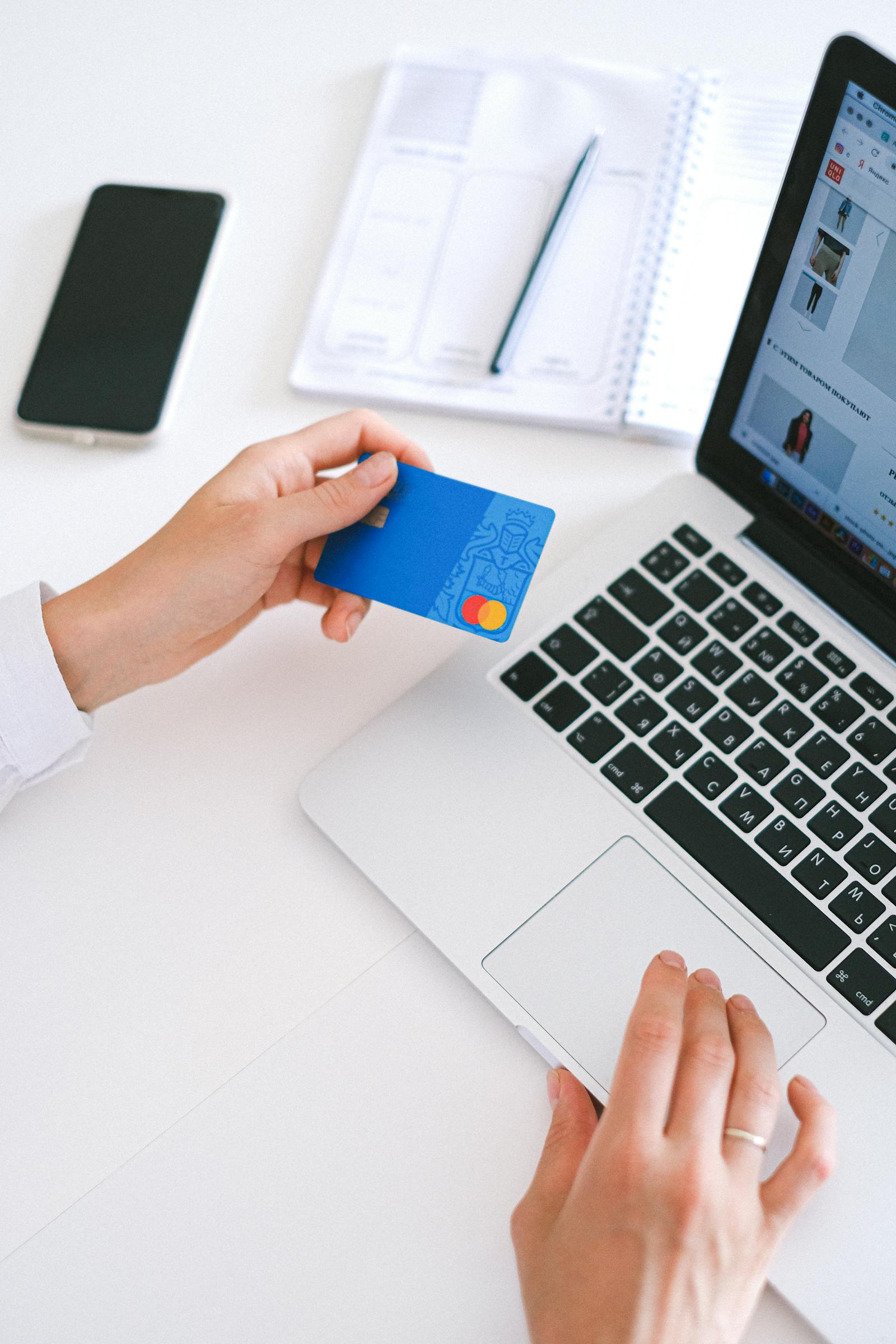
What StoreBuilt sees in checkout audits
Across StoreBuilt checkout audits, the same patterns appear with remarkable consistency.
Most stores are leaving 10–25% of potential checkout conversions on the table because of:
- missing digital wallet options (Apple Pay, Google Pay)
- no BNPL option in the £50–£200 AOV sweet spot
- unnecessary friction from Strong Customer Authentication
- checkout pages that load slowly on mobile
- forced account creation before payment
- unclear or surprising shipping costs revealed only at checkout
One UK beauty brand we audited was converting at 1.8% overall. Their checkout completion rate (cart-to-order) was 38%. After implementing Shop Pay accelerated checkout, adding Klarna for their £60–£90 AOV products, and removing the forced account creation step, their checkout completion rate improved to 52% within eight weeks. The overall conversion rate moved to 2.4%.
That is not an unusual outcome. It is what happens when you remove friction from the highest-intent step in the buying journey.
UK payment method market share 2026
Here is how UK consumers pay for online purchases:
| Payment method | Market share of UK ecommerce (est.) | Year-on-year trend |
|---|---|---|
| Debit cards | 32–38% | Stable, slight decline as wallets grow |
| Credit cards | 14–18% | Stable |
| Digital wallets (Apple Pay, Google Pay, Shop Pay, PayPal) | 30–38% | Growing rapidly (+15–20% YoY) |
| PayPal (standalone) | 12–16% | Stable, slight decline with younger demographics |
| Buy Now Pay Later (Klarna, Clearpay, etc.) | 7–10% | Growing, regulatory scrutiny increasing |
| Bank transfer / open banking | 2–5% | Growing from small base (+25–30% YoY) |
| Prepaid cards / vouchers | 1–3% | Stable |
Sources: UK Finance Payments Report 2025/2026, PPRO UK payment methods, Worldpay Global Payments Report.
The critical shift: digital wallets have overtaken or are level with traditional debit cards as the most common online payment method for UK consumers under 40. This fundamentally changes what a Shopify checkout needs to offer.
Agency observation: The stores that are growing fastest in our portfolio are the ones that have embraced the wallet-first reality. Their checkout loads Shop Pay or Apple Pay as the primary option, with card entry as the fallback — not the other way around. This single change reduces mobile checkout time from 60–90 seconds to under 15 seconds for returning customers.

Digital wallets: the biggest conversion opportunity
Digital wallets (Apple Pay, Google Pay, Shop Pay) are the single biggest checkout conversion opportunity for UK Shopify stores.
Why digital wallets convert better
| Factor | Traditional card entry | Digital wallet |
|---|---|---|
| Time to complete checkout | 60–120 seconds | 5–15 seconds |
| Form fields to complete | 12–18 | 0–2 (biometric only) |
| Typing errors possible | Yes | No |
| Address entry required | Yes | Auto-filled |
| SCA friction | Yes (3DS2 challenge) | Reduced (biometric serves as authentication) |
| Mobile UX quality | Poor (small keyboard, many fields) | Excellent (single tap) |
Digital wallet conversion impact
| Wallet | Conversion lift vs card-only checkout | Notes |
|---|---|---|
| Shop Pay | +50% reported by Shopify (vs guest checkout) | Highest for stores with returning Shopify ecosystem customers |
| Apple Pay | +15–30% on mobile | Strongest impact on iOS-dominant traffic |
| Google Pay | +10–20% on mobile | Growing Android share in UK |
| PayPal | +5–15% overall | Trust factor for older demographics, less impact on mobile speed |
Sources: Shopify Shop Pay data, Apple Pay merchant studies, PayPal merchant case studies. Figures vary significantly by store, demographic, and implementation.
Agency observation: The conversion lift from digital wallets is not evenly distributed. The impact is largest on mobile, for stores with high proportions of returning visitors, and for AOVs under £100. For high-AOV stores (£200+), the trust and familiarity of PayPal often matters more than the speed of Apple Pay. The right wallet priority depends on your customer profile.
Implementation on Shopify
Shopify makes digital wallet activation straightforward:
- Shop Pay — enabled by default on Shopify Payments
- Apple Pay — enabled through Shopify Payments settings
- Google Pay — enabled through Shopify Payments settings
- PayPal — requires connecting a PayPal business account
The critical detail most stores miss: digital wallets should appear as express checkout buttons above the standard checkout form, not below it. The default Shopify checkout does this, but custom checkout extensions or legacy themes sometimes push wallet buttons to the bottom.
Buy Now Pay Later: the data behind the headlines
BNPL has become a significant payment method in UK ecommerce, but the conversation around it is often either uncritically enthusiastic or entirely dismissive. The reality is more nuanced.
UK BNPL market data
| Metric | UK figure |
|---|---|
| UK adults who have used BNPL at least once | ~30–35% |
| UK BNPL market value (2026 est.) | £18–22 billion |
| Average BNPL transaction value | £65–£120 |
| Most active demographic | 25–34 year olds (40–48% usage) |
| Least active demographic | 55+ (12–18% usage) |
| BNPL conversion lift on qualifying orders | +20–30% |
| AOV increase when BNPL available | +15–25% |
Sources: FCA BNPL market data, UK Finance, Yahoo Finance BNPL market reports, merchant case studies.
BNPL conversion impact by AOV band
This is the data point most stores miss — BNPL does not help equally across all price points:
| AOV band | BNPL conversion impact | BNPL adoption rate | Recommendation |
|---|---|---|---|
| Under £30 | Minimal (+2–5%) | Low (5–8%) | Not worth the merchant fee |
| £30–£50 | Moderate (+8–12%) | Moderate (12–18%) | Consider if margins support it |
| £50–£100 | Strong (+18–25%) | High (20–30%) | Strongly recommended |
| £100–£200 | Strongest (+22–30%) | Highest (25–35%) | Essential for this AOV range |
| £200–£500 | Moderate (+12–18%) | Moderate (15–22%) | Useful but credit limits apply |
| £500+ | Low (+5–10%) | Low (8–12%) | Traditional finance/credit more appropriate |
Agency observation: The sweet spot for BNPL on Shopify is the £50–£200 AOV range. Below that, the merchant fee (typically 2–6% of transaction value) erodes margins without enough conversion lift to justify it. Above £200, BNPL credit limits and consumer hesitancy reduce uptake. StoreBuilt typically recommends one BNPL provider (Klarna for broader brand recognition, or Clearpay for fashion-oriented stores), not multiple providers that add complexity.
The regulatory landscape
The FCA is actively regulating BNPL in the UK. Key developments:
| Timeline | Regulatory development |
|---|---|
| 2023 | FCA consultation on BNPL regulation published |
| 2024 | Draft rules proposed — affordability checks, clear terms, complaint handling |
| 2025 | Legislation progressing through Parliament |
| 2026 | Implementation expected — BNPL providers must be FCA-authorised |
What this means for merchants: The regulatory changes primarily affect BNPL providers, not merchants. But merchants should ensure their chosen BNPL provider is actively preparing for FCA authorisation. Providers that are not compliant risk withdrawal from the market, which would disrupt your checkout.
BNPL providers on Shopify
| Provider | Shopify integration | Merchant fee (typical) | Customer experience | Best for |
|---|---|---|---|---|
| Klarna | Native Shopify app | 2.5–5.5% | Pay in 3 or Pay in 30 | Broadest UK brand recognition |
| Clearpay | Native Shopify app | 4–6% | Pay in 4 instalments | Fashion and beauty, younger demographics |
| PayPal Pay Later | Through PayPal integration | Included in PayPal fees | Pay in 3 | Stores already using PayPal |
| Zilch | Via checkout extension | Varies | Pay in 4 | Growing but smaller market share |

Open banking and pay-by-bank: the emerging option
Open banking (account-to-account or A2A payments) is the fastest-growing payment method in UK ecommerce, albeit from a small base.
Open banking market data
| Metric | UK figure |
|---|---|
| UK open banking payments (2025) | ~12 million per month |
| Growth rate (YoY) | +25–35% |
| Merchant fee (typical) | 0.2–0.5% (significantly lower than cards) |
| Consumer awareness | 35–45% |
| Consumer willingness to use | 20–28% |
| Average transaction value | Higher than card average |
Sources: Open Banking Implementation Entity (OBIE), Brite Payments research.
Why open banking matters for Shopify merchants
| Advantage | Detail |
|---|---|
| Lower fees | 0.2–0.5% vs 1.5–2.5% for card processing |
| No chargebacks | Payments are irrevocable — bank-level authentication |
| Instant settlement | Funds arrive immediately, not in 2–5 business days |
| Strong authentication built in | Bank app authentication satisfies SCA natively |
| Higher average transaction values | Consumers more willing to pay large amounts via bank transfer |
Agency observation: Open banking is not yet a must-have for most Shopify stores, but it is on the radar. The primary use case today is for stores with high AOVs (£200+) where card processing fees are significant and where customers are comfortable with bank-app authentication. Within 2–3 years, pay-by-bank is likely to become a standard checkout option alongside cards and wallets. Forward-thinking stores should monitor this closely.
Shopify does not yet offer native open banking integration, but third-party checkout extensions from providers like Noda and Brite are available for Shopify Plus stores.
Strong Customer Authentication: the conversion tax
Strong Customer Authentication (SCA), mandated under PSD2, requires additional verification for online card payments. While it has improved fraud protection, it has also created conversion friction.
SCA impact on UK ecommerce
| Metric | UK data |
|---|---|
| Estimated daily lost sales due to SCA friction (UK) | £1.5–2.5 million |
| Initial conversion drop when SCA was introduced | 5–15% |
| Current conversion drop (with optimised 3DS2) | 2–5% |
| 3DS2 challenge rate (well-optimised) | 5–15% of transactions |
| 3DS2 challenge rate (poorly optimised) | 25–40% of transactions |
| Frictionless flow rate (best practice) | 60–80% of transactions |
Sources: Barclays SCA impact data, Stripe SCA performance reports, Signifyd UK State of Commerce.
How to minimise SCA conversion loss
| Strategy | Impact | Shopify implementation |
|---|---|---|
| Enable 3DS2 frictionless flows | Highest — most transactions skip challenge | Shopify Payments handles this automatically |
| Use digital wallets (biometric = SCA compliant) | High — bypasses card-based SCA entirely | Enable Apple Pay, Google Pay, Shop Pay |
| Optimise transaction risk scoring | Moderate — fewer false positives | Choose a payment processor with strong risk engine |
| Implement SCA exemptions for low-value transactions | Moderate — transactions under £25 can be exempted | Requires payment processor support |
| Reduce cart abandonment at authentication step | Moderate | Clear messaging: “Your bank may ask you to verify” |
Agency observation: The single best thing most Shopify stores can do to reduce SCA friction is maximise digital wallet adoption. When a customer pays with Apple Pay (Face ID) or Shop Pay (biometric), the biometric authentication satisfies SCA requirements without triggering a separate bank challenge. This means no redirect to a bank app, no SMS code, no password entry — just a fingerprint or face scan. Every customer you move from card entry to wallet checkout is one fewer customer lost to SCA friction.
UK checkout abandonment: causes and costs
UK checkout abandonment rates remain high, and the causes are well-documented:
| Abandonment cause | % of UK cart abandoners who cite this |
|---|---|
| Unexpected shipping costs | 48–55% |
| Required to create an account | 24–28% |
| Delivery too slow | 18–22% |
| Checkout too complicated | 17–20% |
| Did not trust site with payment info | 15–18% |
| Payment method not available | 8–12% |
| Card declined / SCA failure | 5–8% |
| Technical error | 3–5% |
Sources: Baymard Institute, SaleCycle UK, Shopify checkout data.
The cost of checkout abandonment
| Monthly revenue | Cart abandonment rate | Estimated monthly abandoned revenue | If you recover 10% | If you recover 20% |
|---|---|---|---|---|
| £50,000 | 70% | ~£116,667 in abandoned carts | +£11,667/month | +£23,333/month |
| £100,000 | 70% | ~£233,333 | +£23,333/month | +£46,667/month |
| £250,000 | 70% | ~£583,333 | +£58,333/month | +£116,667/month |
| £500,000 | 70% | ~£1,166,667 | +£116,667/month | +£233,333/month |
These are directional estimates based on the formula: Abandoned Revenue = Revenue / (1 - Abandonment Rate) × Abandonment Rate. The recovery potential assumes targeted interventions (email recovery, checkout optimisation, payment method additions).
Agency observation: Abandoned cart email flows via Klaviyo Email & SMS Retention typically recover 5–15% of abandoned carts. Combined with checkout optimisation (removing friction, adding payment methods, improving speed), the total recovery potential is 15–25% of abandoned revenue. For a £100K/month store, that is £35,000–£58,000 in additional monthly revenue from improvements to the existing checkout, not from additional traffic.

Payment methods by customer demographic
Payment preferences vary significantly by age and demographic in the UK:
| Payment method | Gen Z (18–24) | Millennials (25–40) | Gen X (41–56) | Boomers (57+) |
|---|---|---|---|---|
| Apple Pay / Google Pay | 45–55% | 35–45% | 18–25% | 8–15% |
| Debit card | 40–50% | 45–55% | 55–65% | 60–70% |
| Credit card | 10–18% | 20–30% | 35–45% | 40–50% |
| PayPal | 20–30% | 30–40% | 35–45% | 30–40% |
| BNPL (Klarna, Clearpay) | 30–40% | 25–35% | 10–18% | 5–10% |
| Shop Pay | 15–22% | 12–18% | 5–10% | 3–6% |
| Open banking | 5–10% | 8–15% | 5–8% | 2–5% |
Sources: UK Finance demographics, FCA BNPL demographic data, Worldpay consumer research.
Agency observation: This data should directly inform your Shopify checkout configuration. If your customer base is primarily under-40, digital wallets and BNPL are essential. If your customers skew older, PayPal and clear card entry are more important. Most stores configure their checkout generically instead of for their actual demographic — this is a missed conversion opportunity.
The Shopify checkout stack StoreBuilt recommends
Based on our checkout audits and payment performance data, here is what StoreBuilt recommends for UK Shopify stores:
Essential (every store)
| Method | Why |
|---|---|
| Shopify Payments (card processing) | Lowest fees, native integration, enables Shop Pay |
| Shop Pay | Accelerated checkout, highest conversion lift |
| Apple Pay | Essential for mobile conversion on iOS |
| Google Pay | Growing Android market share |
Recommended (most stores)
| Method | Why | When to add |
|---|---|---|
| PayPal | Trust signal for older demographics, alternative to card | If 20%+ of customers are 40+ |
| Klarna (Pay in 3) | BNPL conversion lift in £50–£200 AOV range | If AOV is £50–£200 and demographic skews 25–40 |
Situational (specific use cases)
| Method | Why | When to add |
|---|---|---|
| Clearpay | Fashion-focused BNPL alternative to Klarna | If fashion/beauty focused with young demographic |
| Open banking (Shopify Plus) | Lower fees on high-AOV transactions | If AOV is £200+ and on Shopify Plus |
| Manual payment methods | Bank transfer for B2B wholesale orders | If operating a B2B/wholesale channel |
What NOT to add
| Method | Why to avoid |
|---|---|
| Multiple BNPL providers | Adds checkout complexity without proportional conversion lift |
| Cryptocurrency payments | Negligible UK consumer adoption, adds confusion |
| Too many checkout extension apps | Each adds JavaScript, slowing checkout load time |
What is coming next in UK ecommerce payments
| Trend | Timeline | Impact for Shopify merchants |
|---|---|---|
| FCA BNPL regulation takes effect | 2026–2027 | Ensure BNPL provider is FCA-authorised |
| Open banking mainstream adoption | 2026–2028 | Monitor Shopify integration availability |
| Biometric-only checkout (no passwords) | Growing now | Already available via Shop Pay and Apple Pay |
| AI-assisted checkout (predictive cart) | 2026–2028 | Shopify exploring; watch for platform updates |
| Variable recurring payments (VRP) via open banking | 2026–2027 | Potential replacement for card-on-file subscriptions |
| Digital pound (CBDC) | 2027–2030+ | Too early to act; monitor Bank of England updates |
Agency observation: The most actionable trend for UK Shopify stores right now is the continued shift toward wallet-first checkout. Everything else on this list is either too early to implement or requires platform-level changes. Focus on maximising Shop Pay, Apple Pay, and Google Pay adoption today — that is where the conversion lift is real and measurable.
StoreBuilt’s view on payments and checkout conversion
Payment configuration is not a set-and-forget decision. It is a conversion optimisation lever that should be reviewed quarterly alongside your CRO metrics.
The brands that extract the most value from their checkout are the ones that:
- Match their payment methods to their customer demographic — not offering everything, but offering the right things
- Prioritise speed over options — a fast checkout with 3 payment methods converts better than a slow checkout with 8
- Minimise SCA friction through digital wallets — every customer paying via biometric wallet is a customer who does not encounter 3DS challenges
- Monitor checkout completion rate as a core KPI — not just conversion rate, but specifically cart-to-order completion
- Use abandoned cart recovery to capture what the checkout loses — email and SMS recovery flows are the safety net
The checkout is the most commercially important page on your entire store. It deserves the same level of attention as your homepage and product pages.
If you want a senior review of your Shopify checkout configuration, payment methods, and checkout conversion rate, Contact StoreBuilt.
High-intent AI search implementation layer
The AI-search version of this topic is not just “write more content”. A useful answer engine result needs a page that gives a direct answer, proves the claim, and shows the next operational step inside Shopify.
| Area | StoreBuilt implementation check |
|---|---|
| Primary intent | The page should map to UK ecommerce payment trends and one clear buyer or operator problem, not a vague traffic topic. |
| Shopify surface | Identify whether the work belongs on a collection, product page, theme section, checkout step, app workflow, email flow, or support process. |
| Proof | Add first-hand observations, product/category examples, screenshots, policy notes, review signals, or trustworthy external sources where they make the advice safer. |
| Internal route | Link the reader to the service most likely to solve the issue: CRO and UX optimisation. |
| Measurement | Check Search Console, analytics, assisted conversions, enquiry quality, and AI-response mentions after the update rather than judging success by pageviews alone. |
For this article, the useful research inputs are: StoreBuilt CRO audit patterns, analytics QA checks, Shopify theme constraints, and buyer-intent SERP patterns. StoreBuilt would prioritise PDP hierarchy, cart friction, mobile merchandising, testing policy, analytics QA, and measured releases before expanding into broader supporting content.
If this topic maps to a live store problem, review the related StoreBuilt service or Contact StoreBuilt with the store URL and the issue you want fixed.