
What we’ve seen in StoreBuilt operations projects is this: teams rarely plan for multi-warehouse complexity until service levels start slipping. At that point, they blame the fulfilment partner or courier mix, but the deeper issue is often platform and routing design.
As soon as one warehouse becomes two or three, stock truth, picking priority, and dispatch promises become platform-level decisions. If those decisions are not explicit, support costs rise and margin quality quietly falls.
If your fulfilment model is scaling faster than your systems clarity, Contact StoreBuilt.
Table of contents
- Keyword decision and research inputs
- Why multi-location fulfilment breaks simple platform setups
- Platform fit matrix for UK multi-warehouse teams
- Order routing and stock governance blueprint
- 3PL integration controls that reduce risk
- StoreBuilt example
- Final StoreBuilt point of view
Keyword decision and research inputs
Primary keyword: multi-warehouse ecommerce UK
Secondary keywords:
- ecommerce platform order routing
- 3PL integration strategy UK
- best ecommerce platform for multiple warehouses
- stock sync ecommerce platform UK
- Shopify multi-location operations
Intent: commercial and implementation-led. Usually operations leaders and ecommerce managers evaluating whether their current stack can support distributed fulfilment.
Funnel stage: middle to bottom funnel.
Likely page type: practical strategy guide.
Why StoreBuilt can realistically win this topic:
- SERP results are often software-led and feature-heavy but weak on governance and sequencing.
- UK teams need pragmatic guidance that combines platform design with operational accountability.
- The problem aligns with consultancy, integration, and support-retainer delivery.
Research inputs used in angle selection:
- SERP pattern checks for “multi-warehouse ecommerce” and related terms show high vendor bias and thin operating-model detail.
- Competing UK agency content often discusses scaling in general terms without concrete order-routing governance.
- Keyword-cluster review patterns show decision-stage demand around reliability, routing logic, and stock-trust recovery.

Why multi-location fulfilment breaks simple platform setups
Single-location logic is easy to operate. Multi-location logic is easy to underestimate.
| Operational shift | What teams assume | What actually happens |
|---|---|---|
| Inventory visibility | Stock is accurate everywhere by default | Location-level latency creates oversell risk |
| Order assignment | Nearest warehouse should always win | Cost, SLA, and inventory depth need weighted routing |
| Returns handling | Returns can be processed centrally | Return destination rules affect recovery speed and cost |
| Campaign planning | Promotions are channel decisions | Promotions change fulfilment load and routing economics |
| Reporting | One fulfilment KPI set is enough | Location-level performance variance must be visible |
The goal is not to make operations perfect. The goal is to make decision logic explicit and repeatable.
Platform fit matrix for UK multi-warehouse teams
| Decision area | Shopify | WooCommerce | BigCommerce |
|---|---|---|---|
| Day-to-day operational usability | Strong | Moderate | Moderate |
| Integration flexibility for OMS/WMS layering | Strong | Strong | Strong |
| Non-technical team adoption speed | Strong | Moderate | Moderate |
| Long-term maintenance overhead | Lower to moderate | Higher | Moderate |
| Fit for scaling with governance | Strong | Case-by-case | Strong |
| Operating profile | Typical fit | Why it works | Primary risk |
|---|---|---|---|
| Fast-scaling UK DTC brand with growing warehouse footprint | Shopify | High execution speed with broad integration options | Connector sprawl without ownership discipline |
| Engineering-led stack with custom routing logic | WooCommerce | Deep control and extensibility | Maintenance burden rises quickly |
| Mid-market programme with formal systems roadmap | BigCommerce | Good API structure for integration-led operations | More up-front planning required |
If your team is expanding fulfilment locations and needs cleaner architecture decisions, see StoreBuilt integration and automation support.
Order routing and stock governance blueprint
| Governance area | Minimum standard |
|---|---|
| Source of truth | Explicit ownership of product, stock, and order status fields |
| Routing policy | Documented rules by SLA, shipping cost, and stock confidence |
| Safety buffers | Location-level buffer logic by SKU volatility |
| Exception handling | Named owner and SLA for failed syncs and route failures |
| Audit cadence | Weekly check of high-impact routing and oversell exceptions |
| First 90 days | Priority | Output |
|---|---|---|
| Days 1-30 | Data and ownership mapping | Clear system map and field ownership register |
| Days 31-60 | Routing and exception rule setup | Tested routing logic and escalation runbook |
| Days 61-90 | KPI dashboard and governance cadence | Weekly operational scorecard with action ownership |
Related resources:
- UK Ecommerce Platform Integration Guide ERP WMS PIM
- Shopify Inventory Forecasting and Stockout Prevention
- Ecommerce Platform Incident Response for UK Retailers
3PL integration controls that reduce risk
3PL relationships are strongest when platform responsibilities are explicit.
| Risk | Signal | Commercial cost | Control action |
|---|---|---|---|
| Stock mismatch | Manual stock corrections rise weekly | Lost orders and support overhead | Enforce sync schedule and discrepancy thresholds |
| Routing conflict | Orders bounce between locations | Dispatch delays and SLA failures | Add deterministic route priority and fallback rules |
| Data blind spots | Finance and ops reports disagree | Slow decision cycles | Shared data dictionary and reporting source rules |
| Carrier drift | Delivery cost rises without clear reason | Margin compression | Route-level carrier performance review cadence |
| Returns inefficiency | High return handling times by location | Lower inventory recovery value | Location-based returns triage standards |
Review StoreBuilt support and audits if warehouse growth is increasing failure rates across integrations.
StoreBuilt example
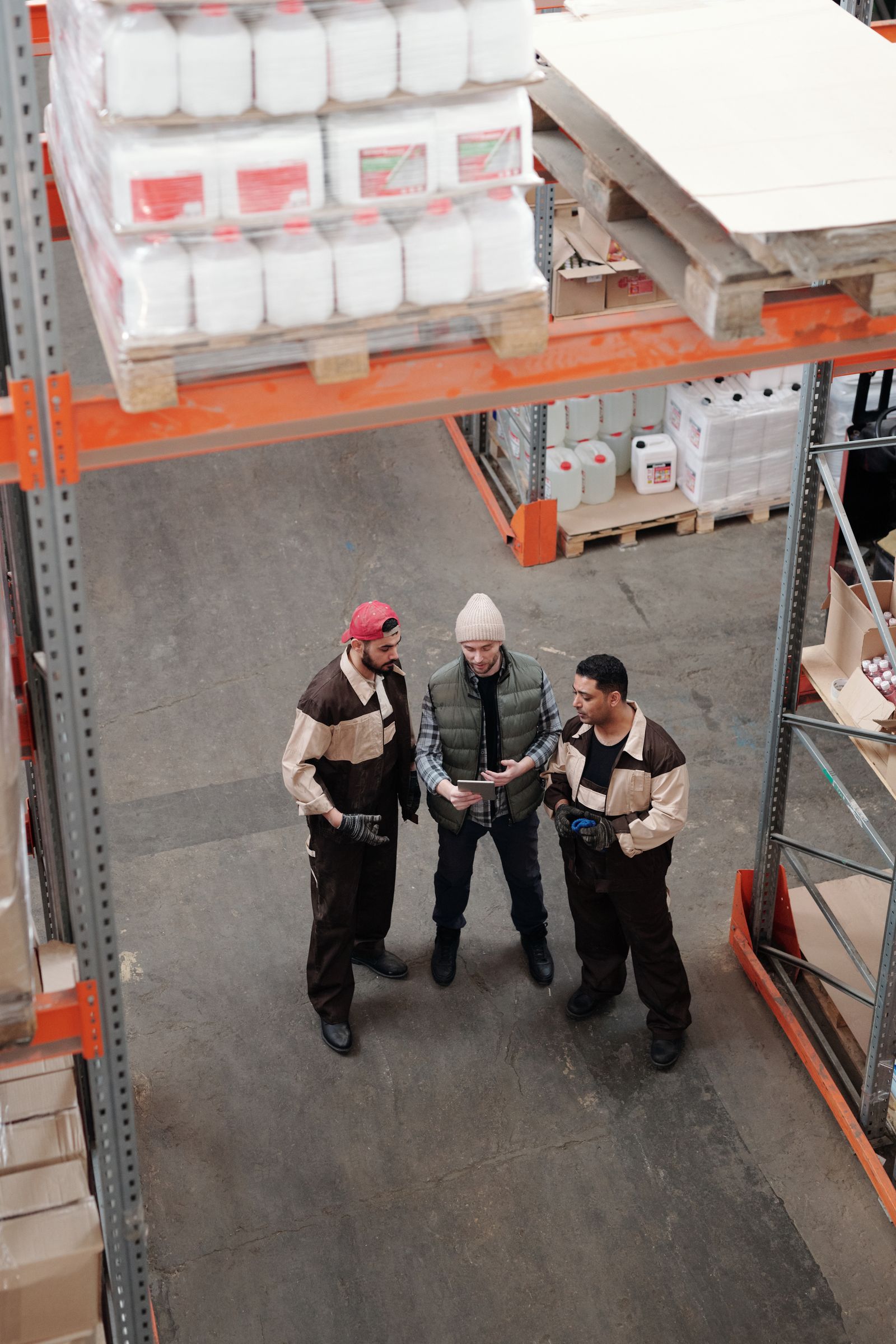
A UK home and lifestyle merchant expanded from one warehouse to two plus an external fulfilment partner. Sales increased, but operations became unstable. Orders were occasionally assigned to suboptimal locations, while support teams spent time explaining dispatch inconsistencies.
Our review found no single catastrophic bug. Instead, there were layered governance gaps: unclear field ownership, ambiguous routing priorities, and no shared exception SLA.
We helped the team create a clear routing policy, align integration ownership, and establish a weekly exception review cadence. Operational confidence improved because decisions became visible and consistent across ecommerce, ops, and support.
If your multi-warehouse setup is driving growth but eroding trust internally, Contact StoreBuilt.
High-intent AI search implementation layer
The AI-search version of this topic is not just “write more content”. A useful answer engine result needs a page that gives a direct answer, proves the claim, and shows the next operational step inside Shopify.
| Area | StoreBuilt implementation check |
|---|---|
| Primary intent | The page should map to multi-warehouse ecommerce UK and one clear buyer or operator problem, not a vague traffic topic. |
| Shopify surface | Identify whether the work belongs on a collection, product page, theme section, checkout step, app workflow, email flow, or support process. |
| Proof | Add first-hand observations, product/category examples, screenshots, policy notes, review signals, or trustworthy external sources where they make the advice safer. |
| Internal route | Link the reader to the service most likely to solve the issue: Apps, integrations and automation. |
| Measurement | Check Search Console, analytics, assisted conversions, enquiry quality, and AI-response mentions after the update rather than judging success by pageviews alone. |
For this article, the useful research inputs are: StoreBuilt support-retainer reviews, Shopify operations documentation, fulfilment/app governance patterns, and UK ecommerce operator intent. StoreBuilt would prioritise app stack decisions, integration logic, automation, data flow QA, and operational reliability before expanding into broader supporting content.
If this topic maps to a live store problem, review the related StoreBuilt service or Contact StoreBuilt with the store URL and the issue you want fixed.
Final StoreBuilt point of view
Multi-location fulfilment is not a logistics-only problem. It is a platform governance problem with direct conversion and margin consequences.
The right UK ecommerce setup is the one that keeps stock trustworthy, routing predictable, and ownership clear enough that complexity does not turn into daily firefighting.